

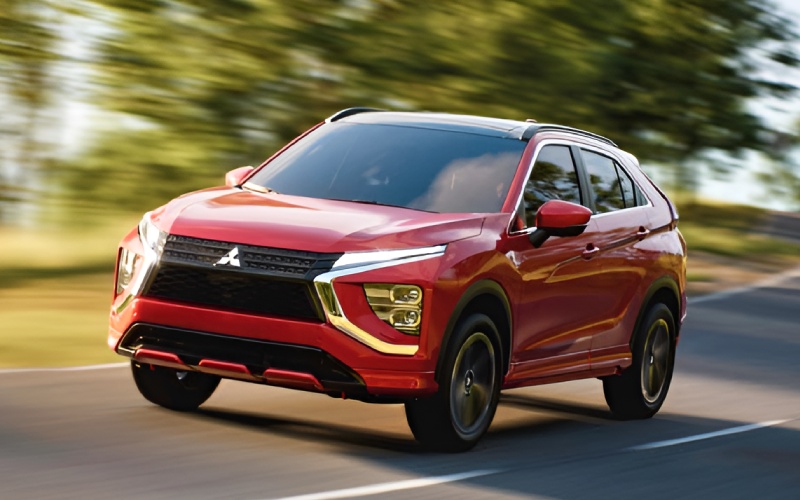
Quakertown Mitsubishi - Which traction system is better for Allentown, PA Drivers — S-AWC on the 2026 Eclipse Cross or Real Time AWD on the 2026 HR-V?
Choosing between advanced all-wheel traction systems often comes down to how predictably and transparently they manage changing grip. This comparison focuses on two popular options: Super-All Wheel Control (S-AWC) on the 2026 Eclipse Cross and Real Time AWD™ on the 2026 HR-V. While both systems aim to maximize stability, S-AWC layers yaw control, wheel-specific braking, and proactive torque management into one integrated system. Real Time AWD™ delivers helpful on-demand traction by sending power rearward when slip is detected, but it does not add the same degree of torque vectoring and lateral control in mixed-friction scenarios.
From a driver’s seat perspective, S-AWC feels calm and settled over plowed-but-slick streets and on crowned, icy intersections. The Eclipse Cross pairs that confidence with Forward Collision Mitigation (FCM) with Pedestrian Detection, Lane Departure Warning (LDW), and available Blind Spot Warning (BSW) with Rear Cross Traffic Alert (RCTA). The HR-V counters with Honda Sensing®, which includes Collision Mitigation Braking and Adaptive Cruise Control, plus available blind spot information on upper trims. Both have wireless Apple CarPlay®, but the Mitsubishi can add a Multi-View Camera System for 360-degree visibility in busy snowbanks and tight parallel-parking spots. For drivers who want a composed, less-is-more feel that reduces steering corrections as conditions change, the Eclipse Cross’s S-AWC shines.
- S-AWC core advantage: Integrates torque distribution and brake-based yaw control to keep the vehicle neutral and stable as grip varies from wheel to wheel.
- Real Time AWD™ strength: Reacts quickly to front-wheel slip and adds rear-axle drive for traction during starts and gentle climbs.
- Visibility boost: Eclipse Cross offers an available Multi-View Camera System; HR-V provides a multi-angle rearview camera only.
- Cold-weather comfort: Eclipse Cross offers a heated steering wheel; HR-V provides heated front seats on select trims but no heated wheel.
- Ownership coverage: Eclipse Cross includes an industry-leading Powertrain Limited Warranty and standard Limited Maintenance; HR-V includes Honda Sensing® and strong brand reliability.
Under acceleration on slushy surfaces, S-AWC’s ability to quell inside-wheel spin and gently pivot the vehicle toward the intended line is noticeable. You turn in, the nose follows, and fewer small corrections are needed. On crowned roads where uneven melt creates left-right friction mismatches, S-AWC helps the Eclipse Cross track true instead of feeling pulled by the crown. Real Time AWD™ provides useful traction from a stop and on gradual grades; it’s confidence-inspiring for casual winter driving, though its tuning prioritizes stability over cornering adjustability. If your daily routine includes unplowed side streets or early-morning commutes after a light overnight snowfall, the Mitsubishi system’s composure is a quiet advantage.
Questions we hear often also revolve around feature depth. The Eclipse Cross can be equipped with a Handsfree Power Tailgate, making gloved-hand loading easier when you’re carrying salt, shovels, or grocery bags. A panoramic roof is available on SE Pano, adding light to cabin spaces darkened by long winter evenings. The HR-V offers a one-touch power moonroof on EX-L, solid audio upgrades, and a clean, modern dashboard. Both vehicles deliver excellent everyday ergonomics; both support wireless Apple CarPlay®. If you want a broader safety camera view and the most comprehensive winter traction logic in this match-up, the Eclipse Cross stacks the deck with key advantages.
From an ownership lens, the Eclipse Cross’s coverage further tips the scales. Mitsubishi backs the powertrain for the long haul and includes Limited Maintenance for two years, helping keep schedules consistent through the first service interval. That peace of mind pairs well with winter-ready hardware and easy-to-use technology. At the same time, Honda’s consistent, well-tuned driver-assistance foundation on HR-V makes it a familiar and friendly choice for drivers who prioritize a classic Honda feel with standard Honda Sensing®.
Quakertown Mitsubishi offers test routes designed to highlight traction and visibility differences in real conditions, and our team is happy to explain how S-AWC logic responds to the roads you drive most. We are proudly serving Allentown, Philadelphia, and Bethlehem with knowledgeable, friendly guidance that puts real-world confidence at the center of your decision.
Frequently Asked Questions:
Does S-AWC work only when it is snowing?
No. S-AWC continuously monitors traction and steering inputs on dry, wet, and snowy roads. Its integrated torque and brake control enhance stability year-round, not just in winter.
Is Real Time AWD™ full-time all-wheel drive?
No. Real Time AWD™ primarily drives the front wheels and sends power rearward when slip is detected. It is effective for traction assists but is not a torque-vectoring system.
Request more 2026 Mitsubishi Eclipse Cross information
Categories:
Mitsubishi Eclipse Cross