

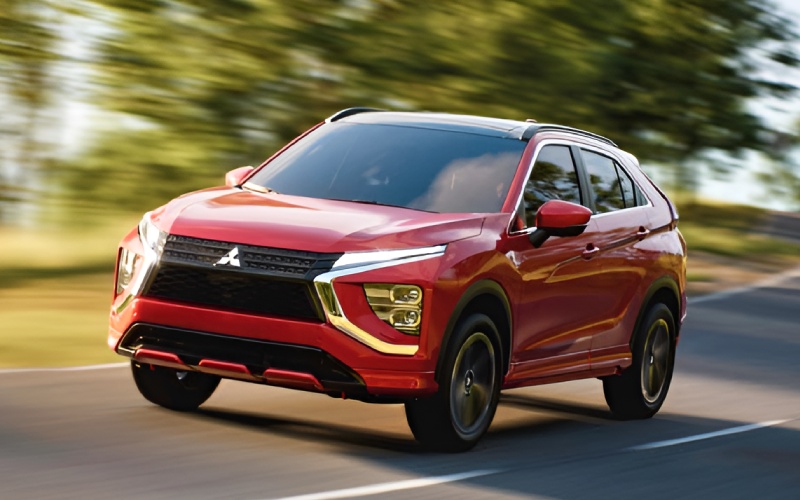
Quakertown Mitsubishi - Which AWD system gives more year-round traction in Philadelphia, PA — S-AWC on the 2026 Eclipse Cross or HTRAC AWD on the 2026 Kona?
All-wheel drive is one of the most common deciding factors when cross-shopping small SUVs. Two popular systems lead many comparison lists—Super-All Wheel Control (S-AWC) on Eclipse Cross and HTRAC AWD on Kona. Both are capable, but the way each one approaches traction and control can influence how secure the vehicle feels when weather turns or surfaces change. This guide answers the key question drivers ask most: which system supports everyday confidence with the least guesswork, from wet highway lanes to slushy neighborhood streets in and around Philadelphia, PA?
S-AWC is engineered as a fully integrated control philosophy. On Eclipse Cross, it is standard on every trim, coordinating torque split and brake-based yaw control with selectable drive modes to promote stability and traction. HTRAC AWD on Kona is available, offering strong capability when equipped and adjustable character via drive modes. The user experience differs in two meaningful ways. First, standardization means Eclipse Cross owners do not have to hunt for AWD in the trim walk; it is included. Second, S-AWC’s emphasis on yaw control and traction logic prioritizes composure, which helps the vehicle feel settled when cornering on wet pavement or accelerating across a patchwork of snow and slush.
- System availability: S-AWC is standard across the Eclipse Cross lineup; HTRAC AWD is available on Kona.
- Control focus: S-AWC coordinates torque and brake-based yaw for stability; HTRAC varies torque split by mode and conditions.
- Drive modes: Eclipse Cross modes are designed for changing surfaces; Kona drive modes tailor feel and response.
- Everyday benefit: S-AWC’s consistency simplifies ownership; HTRAC’s availability adds value when selected.
Beyond traction, confidence also comes from how a vehicle helps the driver avoid trouble. Eclipse Cross includes standard Forward Collision Mitigation (FCM) with Pedestrian Detection and Lane Departure Warning (LDW). Upper trims add Blind Spot Warning (BSW) with Lane Change Assist (LCA), Rear Cross Traffic Alert (RCTA), and a Multi-View Camera System that stitches together a composite view around the vehicle. Kona features an extensive suite of driver-assistance technologies across trims as well, including Smart Cruise Control (SCC) with Stop & Go, with Limited adding Highway Driving Assist (HDA), Surround View Monitor (SVM), and Remote Smart Parking Assist (RSPA). Both SUVs bring modern safety thinking; Eclipse Cross leans into foundational traction and straightforward controls, while Kona layers in advanced convenience on upper trims.
Interior usability rounds out the daily experience. Eclipse Cross offers available features such as FAST-Key Entry with Push Button Start, Handsfree Power Tailgate, heated steering wheel, and an available panoramic roof on SE Pano. Mitsubishi Connect with Safeguard And Remote Services adds remote lock/unlock and assistance functions with an included trial upon enrollment. Kona counters with expansive screens, wireless smartphone integration, and available digital displays. Shoppers who prefer a calm, quiet cabin with ergonomic controls often gravitate toward Eclipse Cross, while those who prioritize larger screens may favor Kona’s layout. Both paths are valid—what matters is finding the balance that aligns with how you live and drive.
Which AWD system is better for most daily drivers? For many owners, S-AWC’s standard inclusion and stability-first tuning deliver a more consistent, predictable feel in mixed weather. HTRAC AWD remains an excellent option when chosen on Kona, but S-AWC’s built-in presence across Eclipse Cross trims removes guesswork and keeps the same traction logic in play no matter which configuration you pick. That is a meaningful advantage in climates with real seasonality.
Quakertown Mitsubishi, serving Philadelphia, Bethlehem, and King of Prussia, welcomes shoppers to compare both systems back-to-back on local roads. One route, two vehicles, and a few minutes on damp or uneven pavement will highlight the difference in how each system manages grip and direction. The right choice is the one that helps you feel calm, centered, and in control every time you drive.
Frequently Asked Questions:
Does S-AWC require special maintenance?
No special routine is required beyond the manufacturer-recommended service intervals for the vehicle’s driveline, tires, and brakes. Following the maintenance schedule keeps S-AWC operating at its best.
Can HTRAC AWD match S-AWC in light snow?
When equipped and paired with appropriate tires, HTRAC AWD performs well in light snow. The difference many drivers report is that S-AWC’s stability-focused logic can feel more composed when surfaces vary corner to corner.
Will I notice S-AWC on dry roads?
Yes, often in subtler ways—steadier tracking on uneven pavement, confident pull-away from gravel shoulders, and composed cornering when lanes are damp or dusty.
Request more 2026 Mitsubishi Eclipse Cross information
Categories:
Mitsubishi Eclipse Cross